“the question is, Can they suffer?”の全文紹介
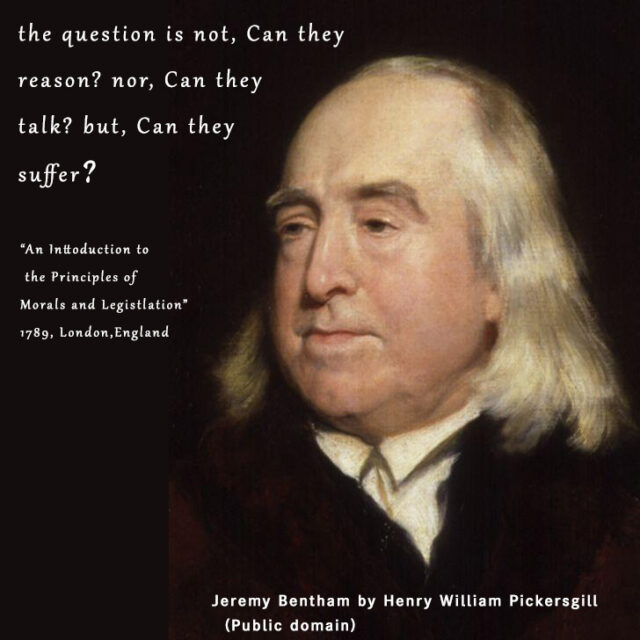
現在まで経済界や政治の世界に大きな影響を与え続けている思想家ベンサムは、動物愛護精神にあふれる人物でもありました。
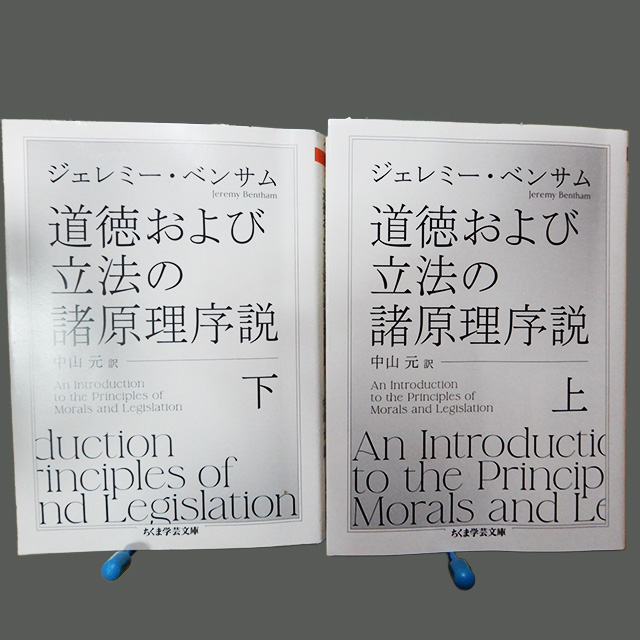
ベンサムの代表作『道徳および立法の諸原理序説』(”An Introduction to the Principles of Morals and Legislation” )は、1780年に活字を組まれ、1789に出版、1823年にベンサム自身による改訂版が出版されました。
この改訂版の中に、動物達への重要な言葉も書かれています。それが有名なこの一文。
the question is not, Can they reason? nor, Can they talk? but, Can they suffer?
.
この文章にもとづくベンサムの動物倫理思想については、↓「猫好きが読んだ千冊の本>ベンサム『道徳および立法の諸原理序説』上・下↓ で書きました。
こちら「里山の動物誌」では、上の書評では書き切れなかった「the question is~の各種訳文」および「原文の全文紹介」を行います。
.
the question is not, Can they reason? nor, Can they talk? but, Can they suffer?の和訳
まずはベンサムのこの文章について、様々な訳のご紹介。
中山元 訳
ジェレミー・ベンサム『道徳および立法の諸原理序説(下)』ちくま学芸文庫、2022年発行、 ISBN:9784480511072
ここで問題なのは動物が理性を行使することができるかということでも、動物が話すことができるかということでもなく、動物は苦しむことができるかということなのである。
ISBN:9784480511072、page302
太線は原書では傍点
戸田清 訳
ピーター・シンガー『動物の解放』(株)技術と人間、1988年発行
問題となるのは、理性を働かせることができるかどうか、とか、話すことができるかどうか、ではなくて、苦しむことができるかどうかということである。
page 31
太字は原書では傍点
井上太一 訳
ピーター・シンガー『新・動物の解放』(株)晶文社、2024年発行、ISBN:9784794974549
問題はかれらが《思考》できるか、《会話》できるかではなく、かれらが《苦しみ》をかんじられるかどうかである。
page 028
高橋洋 訳
ヴィクトリア・ブレイスウェイト『魚は痛みを感じるか?』紀伊國屋書店、2012年発行、ISBN:9784314010931
推論の能力をもっているか、あるいは話せるかが問題なのではない。苦しむ能力をもっているかどうかが問題なのである。
page 108
AIによる訳
人工知能(AI)による訳です。
問題は「彼らは理性的か」ということではない。また「彼らは話せるか」ということでもない。そうではなく「彼らは苦痛を感じるか」ということなのである。
Gemini 3、2026年2月8日
問題は「彼らは理性をもつか」でも「彼らは話すことができるか」でもない。問題はただ一つ――彼らは苦しむことができるか、である。
Copilot, 2026年2月6日
Chapter XVII (17章)Section IV (4節)Paragraph IV (4段落目)と、つけられた原注全文
ありがたいことに、ベンサムの著作は “Econlib > An Introduction to the Principles of Morals and Legislation” のページで無料で読むことが出来ます。それを知ったときはもう本当に嬉しくて。
以下、当該段落全文と、それにつけられた原注全文を、英語の原文とAI和訳で書き出します。
Chapter XVII (17章)Section IV (4節)Paragraph IV (4段落目)原文
V. What other agents then are there, which, at the same time that they are under the influence of man’s direction, are susceptible of happiness. They are of two sorts: 1. Other human beings who are styled persons. 2. Other animals, which, on account of their interests having been neglected by the insensibility of the ancient jurists, stand degraded into the class of
things.*122 As to other human beings, the art of directing their actions to the above end is what we mean, or at least the only thing which, upon the principle of utility, we
ought to mean, by the art of government: which, in as far as the measures it displays itself in are of a permanent nature, is generally distinguished by the name of
legislation: as it is by that of
administration, when they are of a temporary nature, determined by the occurrences of the day.
Cited from : Econlib (Library of Economics and Liberty) >An Introduction to the Principles of Morals and Legislation : OF THE LIMITS OF THE PENAL BRANCH OF JURISPRUDENCE Chapter XVII footnote no.122
※太字イタリック体は引用元では太字ではないイタリック体。綴り、大文字・小文字、改行はすべて原文ママ。
《AIによる和訳》(2026.02.18付)
同時に人間の指示のもとに置かれ、かつ幸福を享受しうる存在として、他にどのような主体があるだろうか。
それらは二種類に分けられる。
- 他の人間──すなわち「人格(persons)」と呼ばれる者たち。
- その他の動物──古代の法学者たちの無感覚ゆえにその利益が顧みられなかったため、「物(things)」の範疇に貶められてしまった存在である。*122
他の人間について言えば、彼らの行為を上記の目的へと導く技術こそ、私たちが「統治の技術」と呼ぶもの、あるいは少なくとも功利の原理に照らしてそう呼ぶべき唯一のものである。
そして、その技術が具体的な施策として現れるとき、それらが恒久的な性質をもつ場合には一般に「立法」と呼ばれ、
一方で、その日その日の出来事によって決定される一時的な性質のものである場合には「行政」と呼ばれる。
*122原注原文
Under the Gentoo and Mahometan religions, the interests of the rest of the animal creation seem to have met with some attention. Why have they not universally, with as much as those of human creatures, allowance made for the difference in point of sensibility? Because the laws that are have been the work of mutual fear; a sentiment which the less rational animals have not had the same means as man has of turning to account. Why
ought they not? No reason can be given. If the being eaten were all, there is very good reason why we should be suffered to eat such of them as we like to eat: we are the better for it, and they are never the worse. They have none of those long-protracted anticipations of future misery which we have. The death they suffer in our hands commonly is, and always may be, a speedier, and by that means a less painful one, than that which would await them in the inevitable course of nature. If the being killed were all, there is very good reason why we should be suffered to kill such as molest us: we should be the worse for their living, and they are never the worse for being dead. But is there any reason why we should be suffered to torment them? Not any that I can see. Are there any why we should
not be suffered to torment them? Yes, several. See B. I. tit. [Cruelty to animals]. The day has been, I grieve to say in many places it is not yet past, in which the greater part of the species, under the denomination of slaves, have been treated by the law exactly upon the same footing as, in England for example, the inferior races of animals are still. The day
may come, when the rest of the animal creation may acquire those rights which never could have been withholden from them but by the hand of tyranny. The French have already discovered that the blackness of the skin is no reason why a human being should be abandoned without redress to the caprice of a tormentor.* It may come one day to be recognized, that the number of the legs, the villosity of the skin, or the termination of the
os sacrum, are reasons equally insufficient for abandoning a sensitive being to the same fate. What else is it that should trace the insuperable line? Is it the faculty of reason, or, perhaps, the faculty of discourse? But a full-grown horse or dog is beyond comparison a more rational, as well as a more conversable animal, than an infant of a day, or a week, or even a month, old. But suppose the case were otherwise, what would it avail? the question is not, Can they
reason? nor, Can they
talk? but, Can they
suffer?
* See Lewis XIV’s Code Noir.
Cited from : Econlib (Library of Economics and Liberty) >An Introduction to the Principles of Morals and Legislation : OF THE LIMITS OF THE PENAL BRANCH OF JURISPRUDENCE Chapter XVII footnote no.122
※太字イタリック体は引用元では太字ではないイタリック体。綴り、大文字・小文字、改行はすべて原文ママ。
《AIによる和訳》(2026/02/06付)
ヒンドゥー教徒(Gentoo)やイスラム教徒(Mahometan)の宗教のもとでは、他の動物たちの利益にも、ある程度の配慮が払われてきたように見える。では、なぜ動物たちの利益は、人間の利益と同じように、感受性の違いを考慮したうえで、普遍的に認められてこなかったのか。その理由は、現存する法律というものが、相互の恐怖によって形づくられてきたからである。そして、理性の劣る動物たちは、人間がそうしてきたように、その恐怖という感情を自らの利益のために利用する手段を持たなかったのである。なぜ(動物の利益を考慮しては)ならないのか。その理由は一つも挙げられない。
もし「食べられること」だけが問題であるなら、私たちが好んで食べる動物を食べることが許されるのには、きわめてもっともな理由がある。私たちはそれによって利益を得るし、彼らはそれによって損をするわけではない。彼らには、私たち人間が抱くような、将来の苦痛を長く引き延ばして思い悩むということがない。私たちの手によって受ける死は、通常、そして常にそうでありうるように、自然の不可避の過程の中で彼らを待ち受ける死よりも、速やかで、その分だけ苦痛の少ないものである。もし「殺されること」だけが問題であるなら、私たちを悩ませる動物を殺すことが許されるのにも、きわめてもっともな理由がある。彼らが生きていると私たちは害を受けるし、彼らは死んだからといって損をするわけではない。
しかし、彼らを苦しめることが許される理由はあるだろうか。私には一つも見いだせない。では、彼らを苦しめることが許されるべきでない理由はあるだろうか。ある。しかもいくつもある。
かつて――そして悲しいことに、いまだ多くの場所ではその時代が終わっていないのだが――人類の大部分は「奴隷」という名のもとに、法律によって、たとえばイングランドにおける下等な動物種とまったく同じ扱いを受けてきた。やがて来るかもしれないその日は、動物界の残りの存在たちが、本来ならば専制の手によってのみ奪われえた権利を獲得する日である。フランス人はすでに、肌が黒いという理由が、人間を拷問者の気まぐれに対して救済なく放置してよい理由にはならないことを発見した。いつの日か、脚の本数や皮膚の毛深さ、あるいは仙骨の形状が、感覚をもつ存在を同じ運命に見捨ててよい理由としては、同じく不十分であると認められるようになるかもしれない。
では、いったい何が越えることのできない境界線を引くというのか。理性の能力だろうか、それとも言語の能力だろうか。しかし、成長した馬や犬は、生後一日、あるいは一週間、さらには一か月の人間の乳児よりも、比べものにならないほど理性的で、また意思疎通もできる動物である。だが、たとえそうでなかったとしても、それが一体何になるというのか?
問題は「彼らは理性をもつか」でも「彼らは話すことができるか」でもない。問題はただ一つ――彼らは苦しむことができるか、である。
ジェレミ・ベンサムについて
アリストテレス以来、人間の生きる目的は「幸福」であるとみなされてきたが、その「幸福」とは何かということはそれほど明確には示されてこなかった。(中略)こうした「幸福」の概念の曖昧さを回避するために、ベンサムはこの「幸福」とは、人間が快を獲得することあるいは苦痛を回避することである、と規定したのだった。
ジェレミー・ベンサム『道徳および立法の諸原理序説(下)』訳者解説、ちくま学芸文庫、ISBN:9784480511072 page 359
ジェレミ・ベンサム(Jeremy Bentham, 1748–1832)は、イギリスの哲学者・法学者・経済学者です。「功利主義(Utilitarianism)」の創始者として有名で、その思想は現代社会にも大きな影響を与え続けています。
- 最大多数の最大幸福
ベンサムの思想の核心は、「最大多数の最大幸福(The greatest happiness of the greatest number)」という原理です。ある行為が正しいかどうかは、その行為がどれだけの喜び(快楽)を生み出し、どれだけの苦しみ(苦痛)を減らすかという「結果」によって決まると考えました。 - 快楽計算(功利計算)
彼は幸福を数値化できると考え、快楽の強さ、持続性、確実性などに基づいた「快楽計算」を提唱しました。この「理性的に計算して社会を最適化する」という発想は、現代の経済学や公共政策の基礎となっています。 - 動物の権利:
「苦痛を感じるかどうか」を基準に動物の保護を訴えました。現代の動物愛護活動や動物福祉、ヴィーガニズムに影響を与えています。 - 人権の先駆者:
奴隷制の廃止、死刑の廃止、女性の権利、同性愛の非犯罪化など、当時としては極めて進歩的な主張を展開しました。
そのほか、パノプティコンという円形刑務所を考案したり、また遺言により自分の体を解剖に捧げた後、防腐処理をして保存(オート・アイコン)させたりもしています。その「実物」は、彼が設立に関わったユニバーシティ・カレッジ・ロンドン(UCL)に今も展示されているそうです。

.